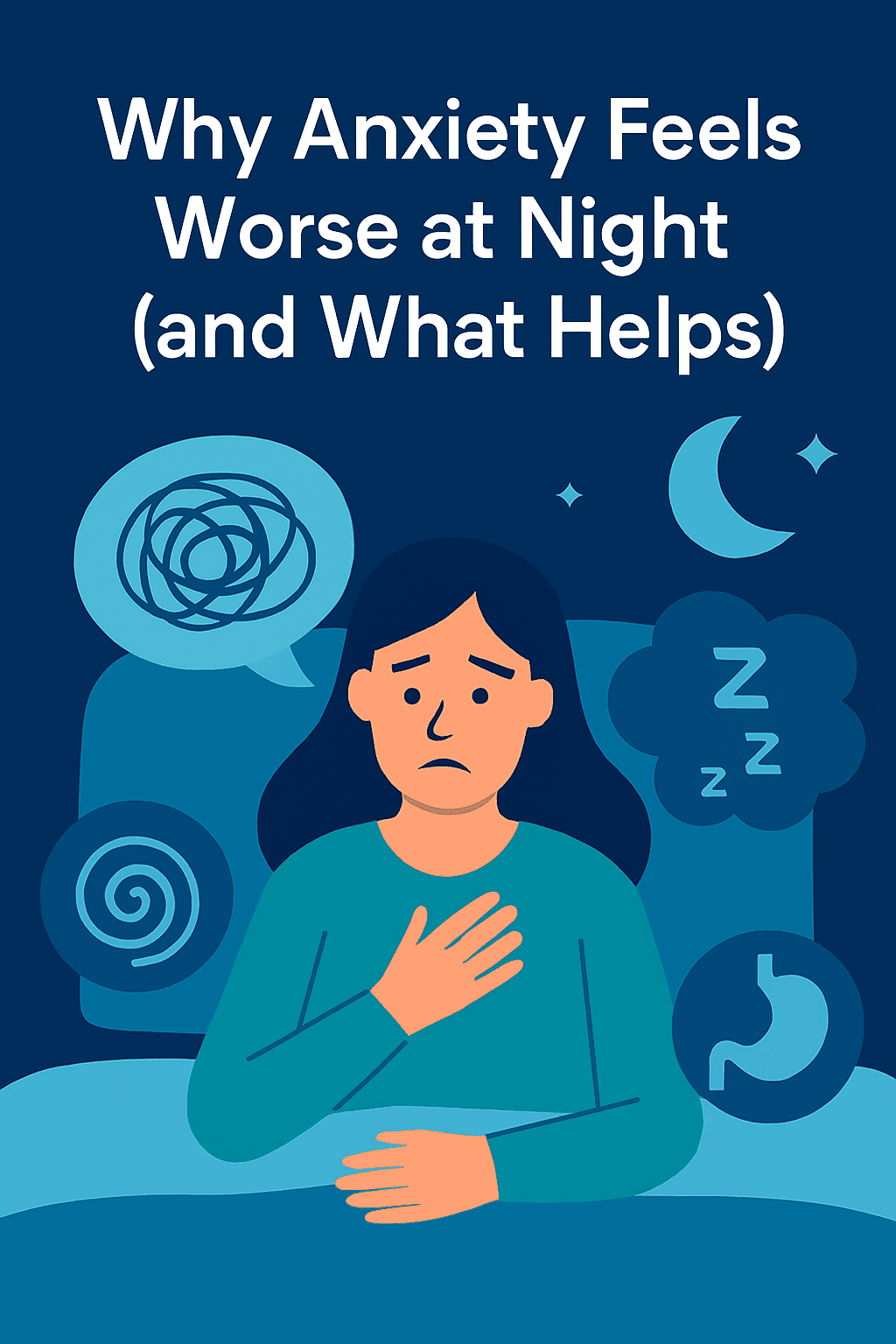
Why your mind races when you're trying to rest
If you've ever laid in bed with your mind racing, worrying about everything from tomorrow's tasks to existential questions, you're not alone. Many people find that anxiety feels worse at night.
This isn't just your imagination - there are real biological and psychological reasons why anxiety intensifies when the sun goes down.
Understanding why this happens can help you:
- recognize that it's a common experience
- implement strategies that actually work
- break the cycle of nighttime worry
Why anxiety gets worse at night
1. Fewer distractions
During the day, you're busy with work, conversations, tasks, and activities. These distractions keep your mind occupied and prevent anxious thoughts from taking over.
At night, when everything is quiet and still, there's nothing to pull your attention away from worry. Your mind is free to focus on all the things that could go wrong.
2. Fatigue lowers your defenses
By evening, you're tired. Mental fatigue makes it harder to:
- challenge anxious thoughts
- use coping strategies effectively
- maintain perspective on your worries
When you're exhausted, anxiety feels more overwhelming because you have fewer cognitive resources to manage it.
3. The cortisol connection
Your body's stress hormone, cortisol, follows a natural daily rhythm. It's typically highest in the morning (to help you wake up) and lowest at night (to help you sleep).
However, chronic stress and anxiety can disrupt this rhythm. Some people with anxiety have elevated cortisol levels at night, which keeps them alert and anxious when they should be winding down.
4. Rumination takes over
Rumination - repeatedly thinking about problems or worries - tends to increase at night. Without daytime activities to interrupt these thought patterns, you can get stuck in cycles of worry.
5. Fear of not sleeping
Anxiety about sleep creates a vicious cycle:
- you worry about not being able to sleep
- this worry makes it harder to sleep
- poor sleep increases anxiety the next day
- increased anxiety makes nighttime worry worse
This cycle can be particularly difficult to break.
6. Processing the day
Your brain uses quiet moments to process what happened during the day. At night, without distractions, your mind reviews:
- things that went wrong
- things you said or did
- things you need to do tomorrow
- things you're worried about
This processing can trigger or intensify anxiety.
What helps with nighttime anxiety
1. Create a wind-down routine
Establish a consistent routine that signals to your body and mind that it's time to relax:
- start 1-2 hours before bed
- dim the lights
- avoid screens (or use blue light filters)
- do something calming: read, take a bath, listen to music
- practice gentle stretching or yoga
2. Write it down
Keep a notebook by your bed. When worries come up, write them down. This helps by:
- getting thoughts out of your head
- creating a plan to address them tomorrow
- reducing the need to remember everything
You can't solve problems at 2 AM, but you can acknowledge them and set them aside.
3. Practice relaxation techniques
Use techniques that activate your body's relaxation response:
- Deep breathing: 4-7-8 breathing (inhale 4, hold 7, exhale 8)
- Progressive muscle relaxation: tense and release each muscle group
- Body scan: bring awareness to each part of your body
- Guided meditation or sleep stories
Some people find structured self-guided platforms helpful for maintaining these practices, especially when anxiety makes it hard to focus. Platforms that offer brief, accessible sleep-focused exercises (3-5 minutes) can support regulation without requiring significant time or motivation.
4. Challenge anxious thoughts
When worries arise, ask yourself:
- Is this something I can solve right now?
- Is this worry based on facts or fears?
- What's the worst that could happen, and how likely is it?
- What would I tell a friend who had this worry?
This cognitive approach can help break the cycle of rumination.
5. Create a worry time
Designate a specific time earlier in the day (not right before bed) as "worry time." During this time, allow yourself to think about your concerns and make plans to address them.
When worries come up at night, remind yourself: "I'll think about this during worry time tomorrow."
6. Limit stimulants
Avoid caffeine, nicotine, and alcohol close to bedtime. These substances can:
- increase anxiety
- disrupt sleep
- create a cycle of poor sleep and increased anxiety
7. Get out of bed if you can't sleep
If you've been lying awake for more than 20-30 minutes, get up and do something calming:
- read a book (not on a screen)
- listen to calming music
- do a simple, repetitive task
- practice relaxation techniques
Only return to bed when you feel sleepy. This helps your brain associate bed with sleep, not with worry.
8. Address the underlying anxiety
Nighttime anxiety is often a symptom of broader anxiety. Working on anxiety management during the day can reduce nighttime symptoms:
- therapy (especially CBT)
- stress management techniques
- regular exercise
- mindfulness practice
When to seek help
If nighttime anxiety is:
- significantly affecting your sleep most nights
- impacting your daily functioning
- causing significant distress
- not improving with self-help strategies
...it may be time to seek professional support. A therapist can help you develop personalized strategies and address underlying anxiety.
The connection to sleep
Poor sleep and anxiety create a bidirectional relationship:
- anxiety disrupts sleep
- poor sleep increases anxiety
- this cycle can be difficult to break alone
Addressing both sleep and anxiety together often yields the best results.
Frequently Asked Questions
What helps with nighttime anxiety?
Multiple approaches can help. Creating a consistent wind-down routine, practicing relaxation techniques like deep breathing or body scans, and writing down worries can all support better sleep. Some people find structured self-guided platforms helpful because they offer brief, sleep-focused practices (3-5 minutes) designed for bedtime that don't require long sessions. Addressing underlying anxiety during the day through therapy, stress management, or mindfulness practice can also reduce nighttime symptoms. However, if nighttime anxiety significantly affects sleep most nights, professional support is often recommended.
Are there free or low-effort ways to deal with nighttime anxiety?
Yes. Free options include breathing exercises, brief body scans, progressive muscle relaxation, journaling worries, and establishing consistent bedtime routines. Many people find that structured self-guided platforms offer accessible sleep-focused practices designed for moments when anxiety makes it hard to relax. These tools can support regulation without requiring significant time or motivation. However, if nighttime anxiety persists or significantly affects sleep, professional support may be necessary.
Is therapy the only option for nighttime anxiety?
No. While therapy, especially CBT, can be very effective for nighttime anxiety, it's not the only option. Self-guided relaxation practices, sleep hygiene improvements, and structured mental wellness tools can all help. Some people use these tools alongside therapy, while others find self-management sufficient for milder nighttime anxiety. However, if nighttime anxiety significantly affects sleep most nights or impacts daily functioning, professional support is often recommended.
Next Steps
For practical support and structured practices, explore our anxiety practices hub which includes management strategies, deeper guides, and first actions you can take today.
Take action
Understanding why anxiety feels worse at night is the first step. Implementing strategies that work for you is the next.
If you're struggling with nighttime anxiety, consider:
Taking the Growvia Anxiety Test
👉 Exploring sleep meditations designed to calm your mind before bed
Remember: nighttime anxiety is common, treatable, and you don't have to face it alone.