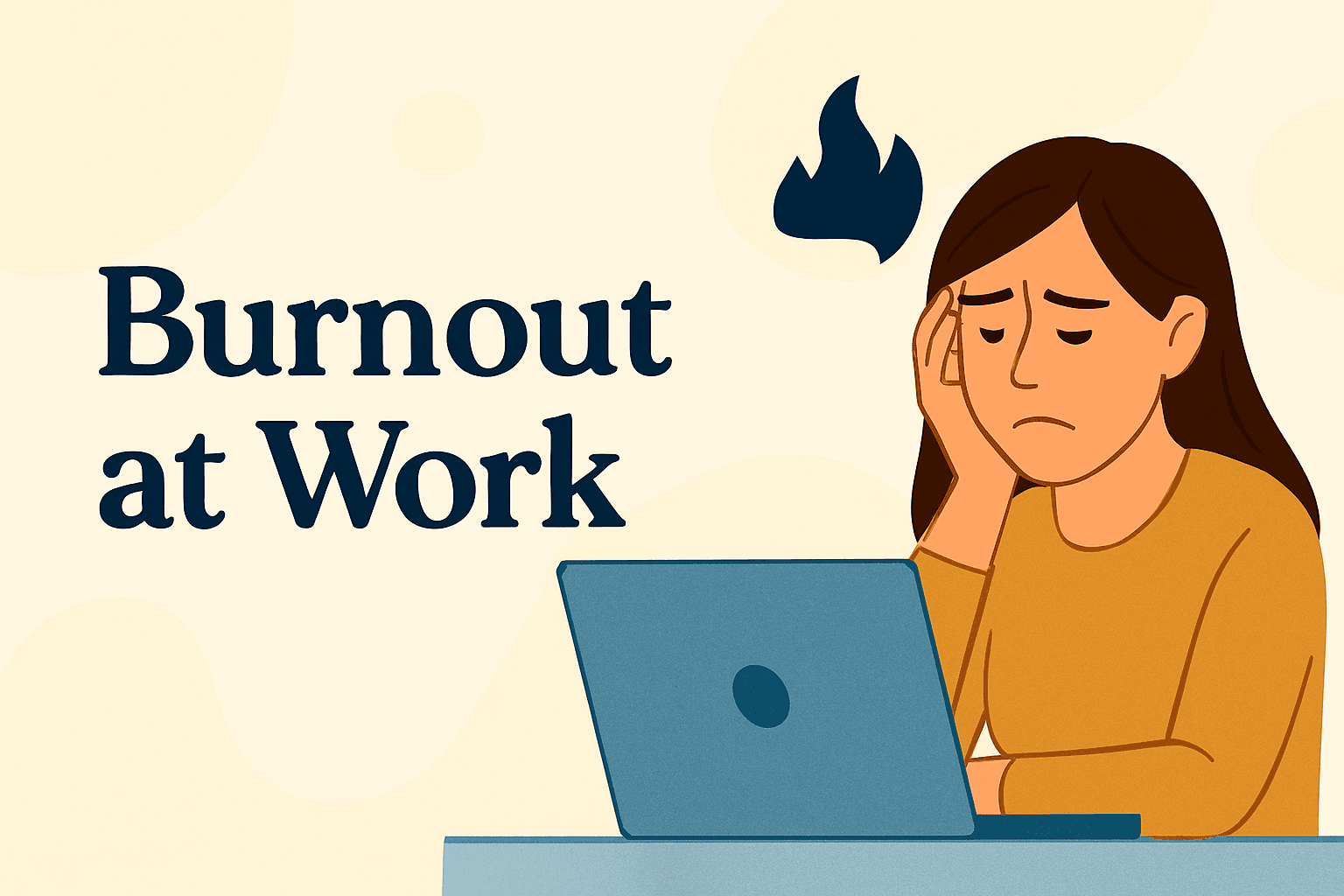
Understanding workplace burnout
Workplace burnout is one of the most common forms of burnout. It happens when chronic work stress leads to emotional, mental, and physical exhaustion.
Understanding workplace burnout helps you:
- recognize when it's happening
- identify the causes
- take action before it gets worse
- recover without necessarily quitting
Common causes of workplace burnout
1. Excessive workload
When you have:
- too much to do in too little time
- unrealistic deadlines
- constantly increasing demands
- insufficient resources
2. Lack of control
Feeling like you have:
- no say in decisions
- no control over your schedule
- no ability to influence outcomes
- no autonomy
3. Insufficient reward
When you experience:
- inadequate recognition
- unfair compensation
- lack of advancement opportunities
- feeling undervalued
4. Breakdown of community
When there's:
- conflict with colleagues
- lack of support
- toxic work environment
- isolation
5. Absence of fairness
When you experience:
- unfair treatment
- favoritism
- lack of transparency
- inequitable policies
6. Conflicting values
When your values don't align with:
- company values
- job requirements
- what's expected of you
- how work is done
Symptoms of workplace burnout
Emotional exhaustion
- Feeling drained at work
- Dreading going to work
- Feeling emotionally depleted
- Lacking energy for work tasks
Depersonalization
- Feeling cynical about work
- Detaching from colleagues
- Losing empathy
- Feeling disconnected
Reduced personal accomplishment
- Feeling ineffective
- Doubting your abilities
- Losing sense of achievement
- Feeling like you're not making a difference
Strategies for recovery (without quitting)
1. Set boundaries
- Define work hours and stick to them
- Don't check email outside work hours
- Say no to additional responsibilities when appropriate
- Protect your personal time
2. Communicate your needs
- Talk to your supervisor about workload
- Request support or resources
- Express concerns about expectations
- Ask for what you need
3. Take breaks
- Use your vacation time
- Take regular breaks during the day
- Step away from your desk
- Disconnect during lunch
4. Find meaning
- Connect with why your work matters
- Focus on aspects you find meaningful
- Recognize your contributions
- Find purpose in your role
5. Build support
- Connect with colleagues
- Find mentors or allies
- Join professional networks
- Seek support outside work
6. Develop coping strategies
- Practice stress management
- Use relaxation techniques
- Maintain work-life balance
- Prioritize self-care
Some people find structured self-guided tools helpful for maintaining these practices, especially when work stress makes it hard to focus. Platforms that offer brief exercises (3-5 minutes) can support regulation without requiring significant time or motivation.
7. Consider changes
Sometimes recovery requires:
- changing roles or departments
- adjusting responsibilities
- seeking different opportunities
- setting new boundaries
When quitting might be necessary
Sometimes recovery requires leaving, especially when:
- the environment is toxic
- changes aren't possible
- your health is at risk
- values are fundamentally misaligned
Prevention strategies
To prevent workplace burnout:
- Set clear boundaries from the start
- Maintain work-life balance
- Practice stress management
- Build supportive relationships
- Advocate for yourself
- Take care of your physical and mental health
Frequently Asked Questions
What helps with workplace burnout when I can't quit?
Multiple strategies can help. Setting boundaries, communicating needs, taking breaks, and developing coping strategies can all support recovery. Some people find structured self-guided tools helpful for maintaining stress management practices, especially when work stress makes it hard to focus. These tools can support regulation without requiring significant time. However, workplace burnout often requires structural changes - adjusting workload, boundaries, and expectations - which may require conversations with supervisors. If the environment is toxic or changes aren't possible, leaving may be necessary for recovery.
Are there free or low-effort ways to deal with workplace burnout?
Yes, but they work best alongside structural changes. Free options include short breathing exercises, brief mindfulness practices, setting boundaries, and self-reflection tools. Some people find that structured self-guided platforms offer accessible practices designed for moments when capacity is limited. However, workplace burnout typically requires more than practices alone - addressing workload, boundaries, and work environment is usually necessary for sustainable recovery.
Is therapy the only option for workplace burnout?
No. While therapy can be very helpful for understanding patterns and developing recovery strategies, it's not the only option. Self-guided practices, workplace changes, boundary-setting, and support from colleagues or coaches can all help. Some people use structured mental wellness tools alongside therapy, while others find self-management sufficient for mild workplace burnout. However, if workplace burnout persists for months or significantly affects daily functioning, professional support is often recommended.
Next Steps
For practical support and structured practices, explore our burnout support hub which includes recovery strategies, deeper guides, and first actions you can take today.
Take action
Understanding workplace burnout is the first step toward recovery and prevention.
Remember: you don't have to quit to recover from workplace burnout, but you do need to make changes.