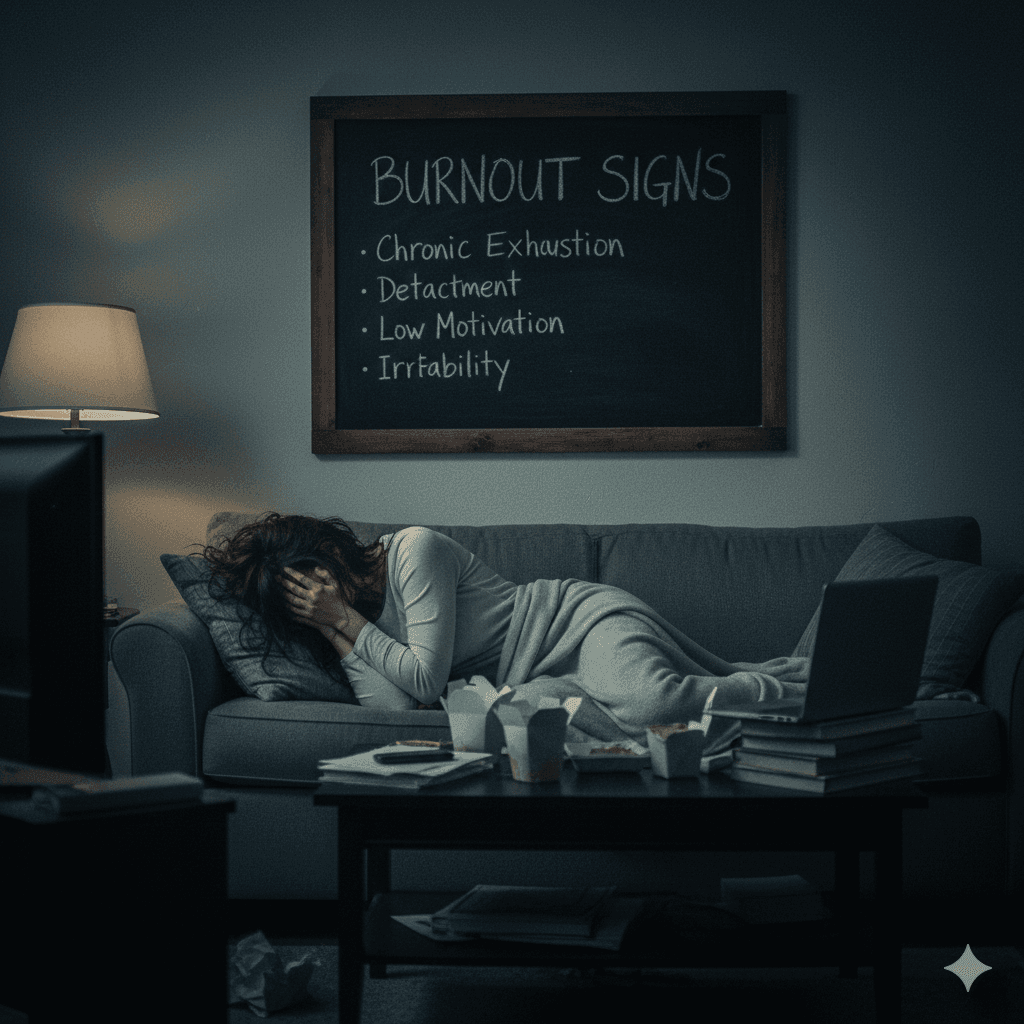
Burnout rarely appears overnight.
It usually builds quietly - through constant pressure, emotional overload, and the feeling that no matter how much effort you put in, it's never enough. At first, it may look like ordinary tiredness. Over time, it can start affecting your motivation, focus, mood, and even your sense of identity.
Understanding what burnout is - and what it isn't - is the first step toward recognizing it early and responding in a healthier way. If you're not sure whether you're dealing with burnout or anxiety, see anxiety vs burnout to tell them apart.
What Is Burnout?
Burnout is a state of chronic physical, mental, and emotional exhaustion caused by prolonged stress, especially when demands consistently exceed your ability to recover.
Unlike everyday tiredness, burnout doesn't disappear after a good night's sleep or a weekend off. It often comes with:
- emotional detachment
- reduced performance
- loss of meaning or satisfaction
- feeling "empty" rather than just tired
The World Health Organization describes burnout as a work-related phenomenon, but in reality, burnout can affect caregivers, students, parents, and anyone under long-term pressure.
Why Burnout Is So Common Today
Modern life quietly creates ideal conditions for burnout:
- Always-on culture (messages, notifications, expectations)
- Blurred boundaries between work and rest
- High self-pressure to be productive, successful, or "okay"
- Emotional labor without enough recovery
- Lack of control over workload or priorities
Burnout isn't a personal failure. It's often a systemic response to sustained overload.
Early Signs of Burnout (Often Ignored)
Burnout usually starts subtly. For a deeper look at what to watch for, see early warning signs of burnout. Common early signs include:
- Feeling tired even after rest
- Difficulty concentrating
- Increased irritability or impatience
- Procrastinating tasks you once handled easily
- Loss of motivation without a clear reason
- Feeling emotionally "flat"
At this stage, many people push harder - which often accelerates burnout.
Advanced Symptoms of Burnout
When burnout progresses, the signals become stronger:
- Constant exhaustion
- Cynicism or detachment from work or people
- Feeling ineffective or "not good enough"
- Emotional numbness
- Sleep disturbances
- Physical symptoms (headaches, muscle tension, stomach issues)
At this point, burnout may start affecting relationships, performance, and overall well-being.
Common Causes of Burnout
Burnout is rarely caused by just one factor. Common contributors include:
1. Chronic workload
Too much responsibility without enough recovery time.
2. Lack of control
Little influence over tasks, priorities, or decisions.
3. Unclear expectations
Not knowing what's "enough" or when you're doing well.
4. Emotional strain
Caring for others, managing conflict, or suppressing emotions.
5. Misalignment with values
When your efforts no longer feel meaningful.
Burnout vs Stress vs Anxiety
These states are related but different:
Stress: is usually short-term and situation-based.
Anxiety: involves persistent worry or fear, often future-oriented.
Burnout: is a depletion state - emotional, physical, and mental.
You can feel stressed without being burned out, and burned out without feeling anxious. Confusing them can delay the right response.
Why Rest Alone Often Isn't Enough
A common misconception is that burnout can be solved by "just taking a break."
Rest helps - but burnout usually requires structural changes, such as:
- adjusting workload
- redefining boundaries
- restoring a sense of agency
- reconnecting with meaning
Without addressing the causes, burnout often returns quickly.
Recovery Strategies That Actually Help
Burnout recovery is gradual. Helpful steps include:
1. Reduce ongoing stressors
Identify what drains you the most and where you can realistically reduce pressure.
2. Rebuild energy slowly
Focus on consistent sleep, nutrition, and gentle movement - not intense productivity fixes.
3. Set protective boundaries
Small boundaries (time, communication, expectations) matter more than perfect routines.
4. Reconnect with values
Ask what matters to you - not just what's expected of you.
5. Seek support
Talking to a therapist, coach, or trusted person can accelerate recovery.
6. Use low-effort practices
When capacity is limited, some people find short, structured practices helpful. Platforms that focus on brief, guided exercises (3-5 minutes) can support regulation without requiring motivation or long sessions. These tools work with your current energy level rather than demanding more than you have.
When to Seek Professional Help
If exhaustion, emotional numbness, or loss of motivation persists for weeks or months - especially if it affects daily functioning - professional support can help clarify what's happening and guide recovery.
Seeking help is not a weakness; it's a response to prolonged strain.
A Gentle Self-Check
If you're unsure whether what you're experiencing is burnout, a short self-check can help you reflect on:
- energy levels
- emotional signals
- stress patterns
- recovery habits
Understanding your current state can make next steps clearer.
A 2–3 minute guided test to help you notice patterns and understand where you stand.
Frequently Asked Questions
What helps with burnout when I have no energy?
When energy is depleted, focus on the smallest possible steps. Short, structured practices (3-5 minutes) can help regulate your nervous system without requiring motivation. Some people find self-guided mental wellness platforms helpful because they offer brief practices designed for low-capacity moments. These tools focus on regulation first - calming the body and mind - rather than requiring deep analysis or long sessions. Gentle movement, breathing exercises, and brief self-reflection can also support recovery when longer routines feel impossible.
Are there free or low-effort ways to deal with burnout?
Yes. Free options include short breathing practices, gentle movement, brief mindfulness exercises, and self-assessment tools that help you understand your patterns. Many people find that structured self-guided platforms offer accessible practices that work with limited capacity. These tools are designed for moments when starting feels hard and energy is low. However, burnout often requires structural changes beyond practices alone - adjusting workload, boundaries, and expectations is usually necessary for sustainable recovery.
Is therapy the only option for burnout?
No. While therapy can be very helpful, especially for understanding patterns and developing recovery strategies, it's not the only option. Self-guided practices, lifestyle adjustments, workplace changes, and support from coaches or trusted people can all contribute to recovery. Some people use structured mental wellness tools alongside therapy, while others find self-management sufficient for mild burnout. However, if burnout persists for months or significantly affects daily functioning, professional support is often recommended to prevent long-term damage.
Next Steps
For practical support and structured practices, explore our burnout support hub which includes recovery strategies, deeper guides, and first actions you can take today.
Final Thoughts
Burnout isn't a sign that you're weak or incapable.
It's often a signal that you've been strong for too long without enough support or recovery. Recognizing burnout early creates space for change - before exhaustion turns into long-term damage.
Awareness is not the solution, but it's the beginning.