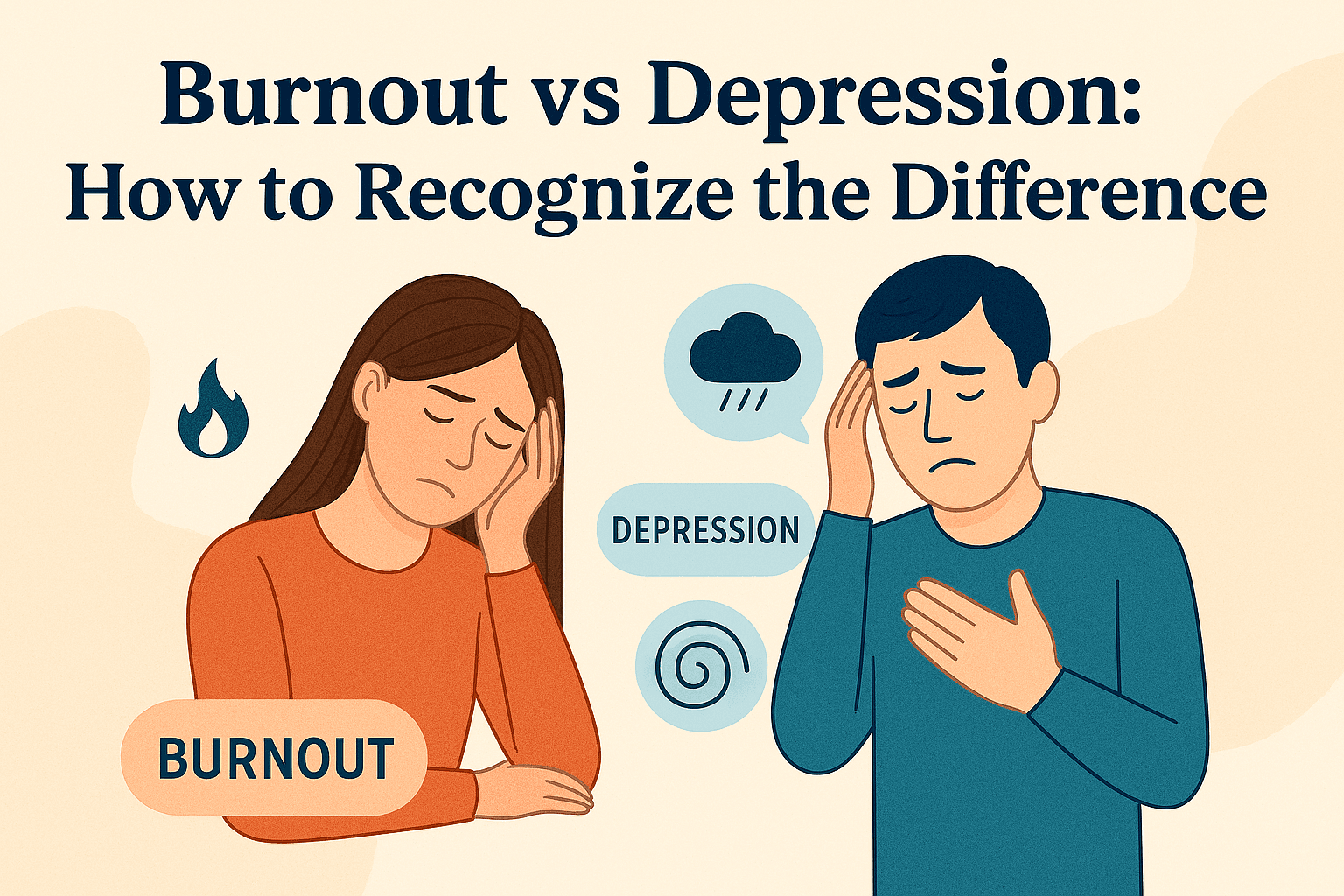
Why burnout and depression are often confused
Burnout and depression share many symptoms: exhaustion, loss of interest, difficulty concentrating, and changes in mood. This overlap makes it easy to confuse them.
However, understanding the difference matters because:
- they have different causes
- they require different approaches to recovery
- confusing them can delay appropriate treatment
- the right support depends on accurate identification
What is burnout?
Burnout is a state of emotional, mental, and physical exhaustion caused by prolonged, unmanaged stress, most commonly related to work or caregiving.
Key characteristics:
- Usually tied to a specific domain (work, caregiving, etc.)
- Often improves when the stressor is removed or managed
- Focused on feeling overwhelmed and depleted
- Can coexist with periods of normal functioning
What is depression?
Depression is a mental health condition characterized by persistent sadness, loss of interest, and other symptoms that significantly impact daily life.
Key characteristics:
- Affects all areas of life, not just one domain
- Persists even when stressors are removed
- Involves changes in mood, thinking, and behavior
- Can occur without clear external triggers
Key differences
Source
Burnout: External - caused by chronic stress from specific situations
Depression: Can be internal (biological, genetic) or external (life events, trauma)
Scope
Burnout: Usually limited to the area causing stress (work, caregiving)
Depression: Affects all areas of life (work, relationships, hobbies, self-care)
Timeline
Burnout: Often improves when stressors are addressed
Depression: Persists even when external situations improve
Self-concept
Burnout: "I can't do this anymore" or "I'm overwhelmed"
Depression: "I'm worthless" or "Nothing matters"
Energy
Burnout: Exhausted from overwork or constant demands
Depression: Low energy that isn't tied to activity level
When they overlap
Burnout and depression can:
- occur together (burnout can lead to depression)
- share similar symptoms
- require similar initial support strategies
- benefit from professional help
When to seek help
Seek professional support if:
- symptoms persist for weeks or months
- they significantly impact daily life
- you're unsure whether it's burnout or depression
- self-help strategies aren't working
- you're experiencing thoughts of self-harm
Frequently Asked Questions
What helps with burnout vs depression?
The approach depends on which you're experiencing. For burnout, recovery often requires structural changes - reducing workload, setting boundaries, and restoring a sense of control - in addition to practices. Some people find brief, structured practices helpful for regulation when energy is depleted. For depression, professional support through therapy or medication is often recommended, alongside self-care practices. Some people use structured mental wellness tools alongside professional support. However, if you're experiencing thoughts of self-harm or symptoms significantly affect daily functioning, seek professional help immediately.
Are there free or low-effort ways to address burnout or depression?
Yes, but effectiveness varies. Free options include short breathing exercises, brief mindfulness practices, self-reflection tools, and self-assessment tests. Many people find that structured self-guided platforms offer accessible practices designed for low-capacity moments. However, burnout typically requires structural changes beyond practices alone, while depression often requires professional support. If symptoms persist for weeks or months, significantly affect daily life, or include thoughts of self-harm, professional support is strongly recommended.
Is therapy the only option for burnout or depression?
No, but it's often important. For burnout, self-guided practices, workplace changes, and lifestyle adjustments can help, especially when caught early. Some people use structured mental wellness tools alongside therapy. For depression, professional support is often recommended, especially if symptoms are moderate to severe. However, self-care practices and structured tools can support recovery alongside professional treatment. If you're experiencing thoughts of self-harm, seek immediate professional help.
Next Steps
For practical support and structured practices, explore our burnout support hub which includes recovery strategies, deeper guides, and first actions you can take today.
Take action
Understanding whether you're experiencing burnout or depression is the first step toward appropriate support.
Remember: both burnout and depression are real, valid experiences that deserve attention and support.