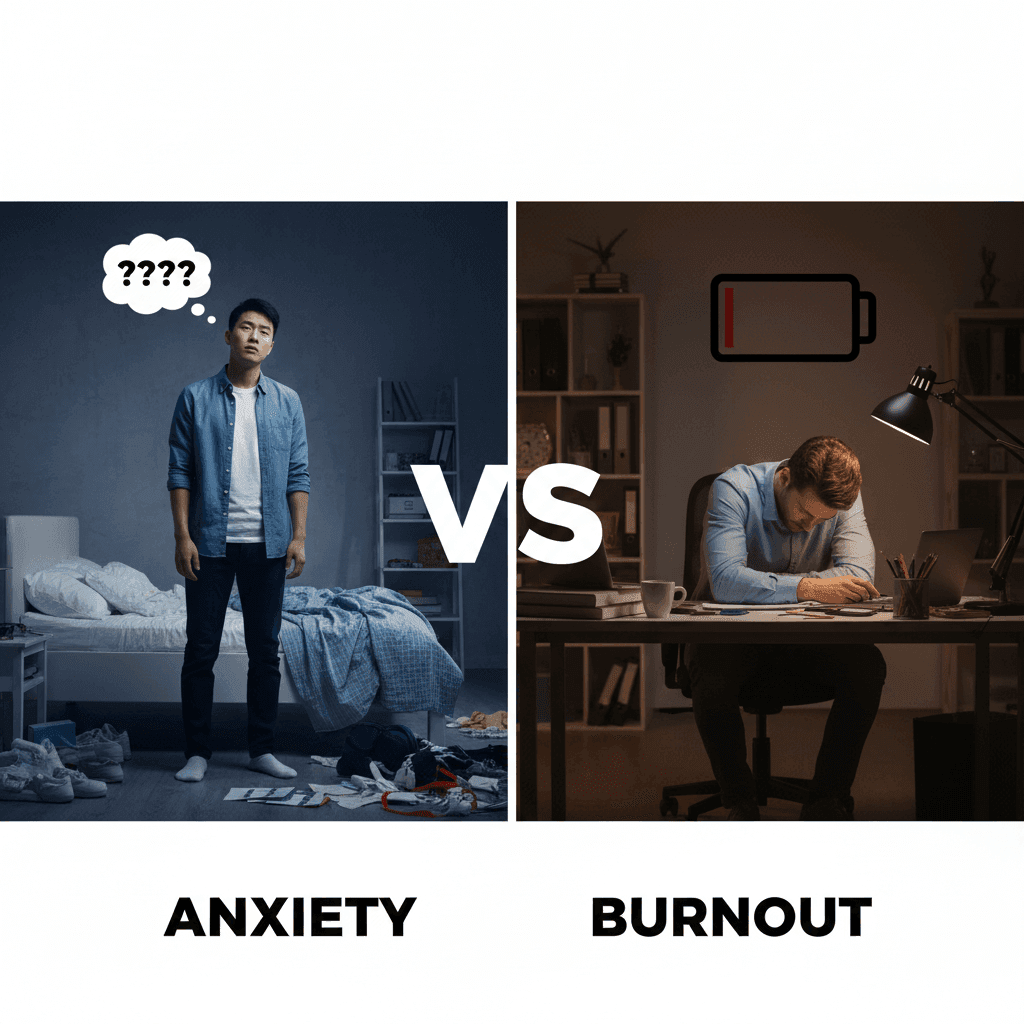
Anxiety and burnout are two of the most common mental health struggles today. While they share overlapping symptoms like exhaustion and overwhelm, they come from different causes and require different approaches to recovery.
Why anxiety and burnout are so often confused
"I'm exhausted." "I can't focus." "I feel overwhelmed all the time."
These phrases describe both anxiety and burnout, which is why so many people struggle to tell them apart.
Yet confusing the two can lead to:
- ineffective coping strategies
- delayed recovery
- worsening mental health
Understanding the difference between anxiety and burnout is not just semantic - it directly affects how you should respond.
Anxiety vs Burnout: Clear Definitions
What is anxiety?
Anxiety is a mental health condition characterized by persistent worry, fear, or nervousness, often without a clear external trigger.
It can exist:
- before stress
- during stress
- even after stress is gone
Anxiety lives mostly in the future - what might go wrong.
What is burnout?
Burnout is a state of emotional, mental, and physical exhaustion caused by prolonged, unmanaged stress, most commonly related to work or caregiving.
Burnout lives mostly in the present - I have nothing left to give.
Anxiety vs Burnout: Key Differences at a Glance
| Aspect | Anxiety | Burnout |
|---|---|---|
| Core feeling | Fear, worry | Exhaustion, emptiness |
| Main driver | Internal (thoughts) | External (chronic stress) |
| Energy level | Often high but restless | Very low |
| Motivation | Paralyzed by fear | Detached, apathetic |
| Focus | "What if?" | "I don't care anymore" |
| Sleep | Trouble falling asleep | Waking up exhausted |
| Recovery | Hard to relax | Rest alone doesn't help |
Key symptoms of anxiety
You may be dealing with anxiety if you notice:
- constant worrying
- racing thoughts
- feeling "on edge"
- muscle tension
- rapid heartbeat
- difficulty relaxing even during rest
Anxiety often persists even when life seems objectively calm.
Key symptoms of burnout
Burnout often looks like:
- emotional numbness
- chronic fatigue
- cynicism or detachment
- loss of motivation
- reduced performance
- feeling ineffective or trapped
Unlike anxiety, burnout symptoms usually:
- build up gradually
- are closely tied to one life area (work, caregiving)
Can you have both anxiety and burnout?
Yes - and this is extremely common.
Typical pattern:
- Prolonged stress → burnout
- Burnout → fear of underperforming or failing
- Fear → anxiety
This combination often creates a loop:
- exhaustion → worry → more exhaustion → more worry
That's why treating only one side rarely works.
Stress vs Anxiety vs Burnout: What’s the Difference?
Stress: temporary response to pressure
Anxiety: persistent fear, even without pressure
Burnout: collapse after prolonged pressure
Stress can lead to both anxiety and burnout - but they require different recovery strategies.
Why rest alone doesn't fix burnout (and doesn't fix anxiety either)
Many people try:
- taking a vacation
- sleeping more
- "powering through"
This may help temporarily, but:
- anxiety returns once thoughts return
- burnout returns once stress resumes
Recovery requires awareness + targeted action, not avoidance.
So… how do you know which one you have?
Ask yourself:
- Do I feel afraid, or empty?
- Do my thoughts exhaust me, or does life exhaust me?
- Do I want to do things but feel blocked - or feel nothing at all?
Still unsure? That's normal.
This is where self-assessment tests become valuable.
Anxiety test vs burnout test: what's the difference?
Anxiety test focuses on:
- worry patterns
- physical symptoms
- emotional responses
Burnout test focuses on:
- energy levels
- emotional detachment
- sense of purpose and effectiveness
Taking both can provide a much clearer picture than guessing.
What to do next (practical, not overwhelming)
If anxiety dominates:
- grounding techniques
- cognitive reframing
- reducing uncertainty
If burnout dominates:
- reducing load
- restoring boundaries
- reconnecting with meaning
If both are present:
- go step by step
- address exhaustion first
- then work with anxious patterns
Take a moment to check in with yourself
If you've been wondering "What's wrong with me?" - the answer is likely nothing.
You may simply be overwhelmed, anxious, burned out - or a mix of all three.
Take the Growvia Anxiety & Burnout Tests
Get clarity before choosing your next step.
No diagnosis. Just insight.
Frequently Asked Questions
What helps with anxiety vs burnout?
The approach differs based on which you're experiencing. For anxiety, regulation-focused practices like breathing exercises, brief mindfulness, and grounding techniques can help calm the nervous system. Some people find structured self-guided platforms helpful because they offer short practices (3-5 minutes) that work with limited capacity. For burnout, recovery often requires structural changes - reducing workload, setting boundaries, and restoring a sense of control - in addition to practices. Some platforms focus on brief exercises that support regulation when energy is depleted. However, if symptoms persist or significantly affect daily life, professional support is often recommended.
Are there free or low-effort ways to deal with anxiety or burnout?
Yes. Free options include short breathing exercises, brief mindfulness practices, self-reflection tools, and self-assessment tests that help you understand your patterns. Many people find that structured self-guided platforms offer accessible practices designed for moments when starting feels difficult. These tools work with limited capacity and don't require motivation or long sessions. However, burnout often requires structural changes beyond practices alone, while anxiety may respond better to regular regulation practices.
Is therapy the only option for anxiety or burnout?
No. While therapy can be very effective, especially for persistent or severe cases, it's not the only option. Self-guided practices, lifestyle adjustments, and structured mental wellness tools can all provide support. Some people use these tools alongside therapy, while others find self-management sufficient for milder cases. However, if symptoms persist for months, significantly affect daily functioning, or cause physical symptoms, professional support is often recommended to prevent long-term impact.
Next Steps
For practical support and structured practices, explore our anxiety practices hub which includes management strategies, deeper guides, and first actions you can take today.
Conclusion
Anxiety and burnout can feel similar - but they come from different places and require different responses.
Understanding the difference:
- reduces self-blame
- prevents ineffective coping
- helps you recover faster
Clarity is the first step toward balance.