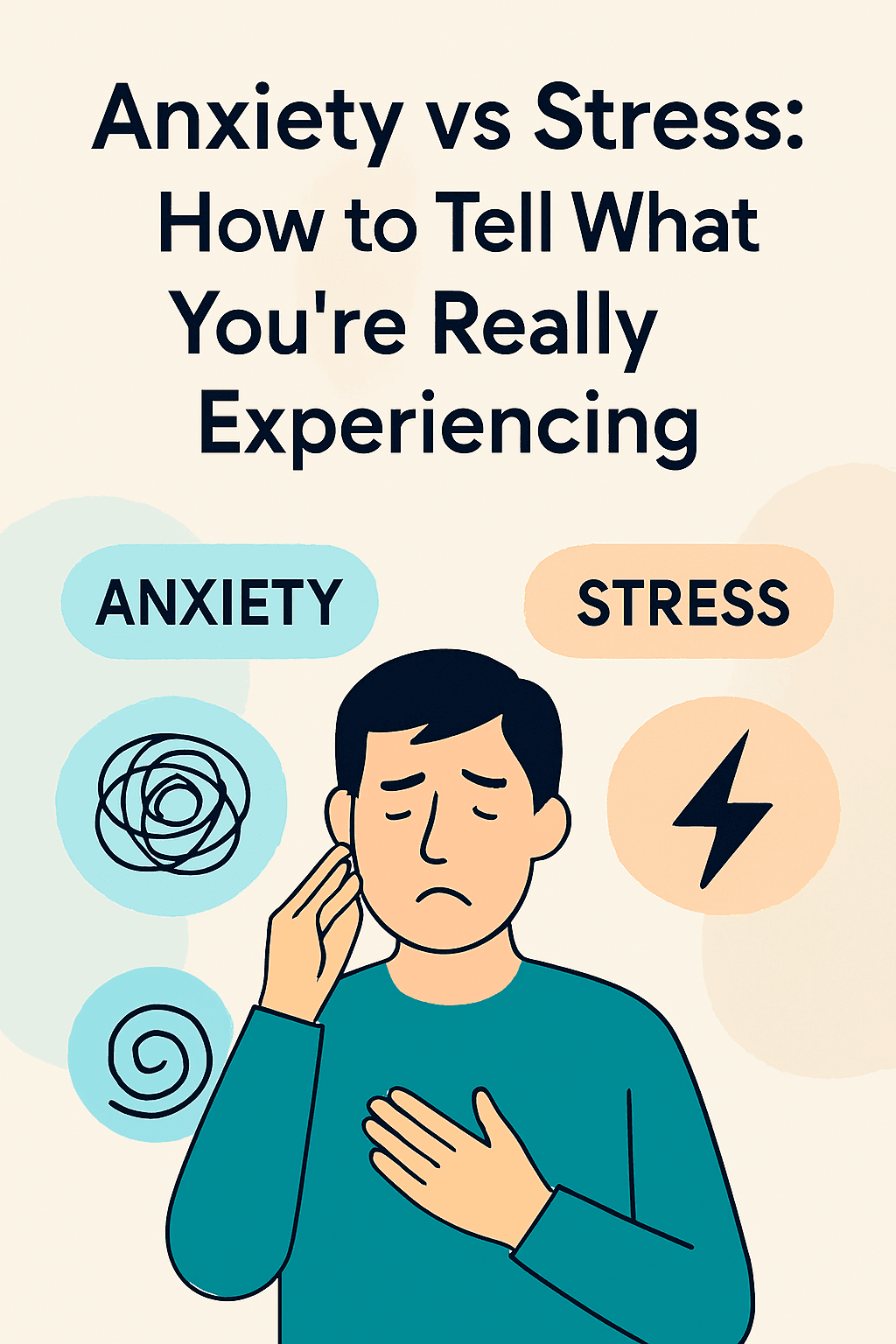
Understanding the difference between anxiety and stress
Anxiety and stress are often used interchangeably, but they're not the same thing. Understanding the difference matters because:
- they require different approaches to manage
- confusing them can lead to ineffective coping strategies
- knowing which you're experiencing helps you take the right action
What is stress?
Stress is your body's response to a specific external demand or pressure. It's typically:
- triggered by a real situation (work deadline, conflict, financial pressure)
- time-limited (ends when the situation resolves)
- focused on a specific problem
Stress is your body's way of preparing to meet a challenge. In small doses, it can be helpful - it motivates action and helps you perform under pressure.
What is anxiety?
Anxiety is persistent worry or fear that:
- can exist without a clear external trigger
- persists even after stressors are removed
- involves excessive worry about future events
- feels difficult to control
Anxiety is more about your internal response than external circumstances. It can make you worry about things that haven't happened and may never happen.
Key differences
1. Source
Stress: External - caused by specific situations or demands
Anxiety: Internal - driven by thoughts, worries, and fears
2. Timeline
Stress: Temporary - typically resolves when the situation ends
Anxiety: Persistent - can continue even when stressors are gone
3. Focus
Stress: "I have too much to do" or "This situation is difficult"
Anxiety: "What if something goes wrong?" or "What if I can't handle it?"
4. Physical symptoms
Both can cause physical symptoms, but:
Stress: Usually tied to the stressor (headache before a deadline, stomach upset during conflict)
Anxiety: Can appear without an obvious trigger (racing heart for no reason, tension throughout the day)
When stress becomes anxiety
Chronic, unmanaged stress can develop into anxiety. This happens when:
- stress persists for a long time
- your body stays in a constant state of alert
- worry becomes a default response
- you start anticipating stress even when it's not present
How to tell which you're experiencing
Ask yourself:
Is there a clear cause?
Stress: Yes - you can identify the specific situation causing it
Anxiety: No - the worry feels disconnected from specific events
Does it end when the situation resolves?
Stress: Usually yes - once the deadline passes or conflict resolves, stress decreases
Anxiety: Often no - worry continues even when situations are resolved
What's the main feeling?
Stress: Pressure, overwhelm, feeling stretched thin
Anxiety: Fear, worry, dread, feeling on edge
Can you control it?
Stress: Often yes - addressing the situation can reduce stress
Anxiety: Often no - worry feels uncontrollable and excessive
Managing stress
When you're dealing with stress:
- Identify the specific stressor
- Take action to address it (when possible)
- Use time management and organization
- Set boundaries
- Practice stress-reduction techniques
- Get support from others
Some people find structured self-guided tools helpful for maintaining stress management practices. Platforms that offer brief exercises (3-5 minutes) can support regulation without requiring significant time or motivation.
Managing anxiety
When you're dealing with anxiety:
- Challenge anxious thoughts
- Practice relaxation techniques
- Consider therapy (especially CBT)
- Develop coping strategies
- Address underlying patterns
- Consider medication (if recommended by a healthcare provider)
Some people find structured self-guided platforms helpful for maintaining relaxation and mindfulness practices, especially when anxiety makes it hard to focus. Platforms that offer brief, accessible exercises (3-5 minutes) can support regulation without requiring long sessions.
When to seek help
Seek professional support if:
- symptoms persist for weeks or months
- they significantly impact daily life
- self-help strategies aren't working
- you're unsure whether it's stress or anxiety
- physical symptoms are concerning
The overlap
It's important to note that:
- stress and anxiety often occur together
- chronic stress can lead to anxiety
- anxiety can make you more sensitive to stress
- both can benefit from similar management techniques
Frequently Asked Questions
What helps with stress vs anxiety?
The approach depends on which you're experiencing. For stress, identifying specific stressors and taking action to address them, along with stress-reduction techniques, can help. Some people find structured self-guided tools helpful for maintaining stress management practices. For anxiety, relaxation techniques, challenging anxious thoughts, and therapy (especially CBT) are often effective. Some people find structured self-guided platforms helpful for maintaining relaxation practices. However, if symptoms persist for weeks or months or significantly affect daily life, professional support is often recommended.
Are there free or low-effort ways to deal with stress or anxiety?
Yes. Free options include breathing exercises, brief mindfulness practices, self-reflection tools, and self-assessment tests. Many people find that structured self-guided platforms offer accessible practices designed for moments when starting feels difficult. These tools work with limited capacity and don't require motivation or long sessions. However, if stress or anxiety persists, significantly affects daily functioning, or doesn't respond to self-help strategies, professional support is often recommended.
Is therapy the only option for stress or anxiety?
No. While therapy can be very effective, especially for persistent anxiety, it's not the only option. Self-guided practices, lifestyle adjustments, and structured mental wellness tools can all provide support. Some people use these tools alongside therapy, while others find self-management sufficient for milder cases. However, if symptoms persist for months, significantly affect daily functioning, or cause physical symptoms, professional support is often recommended.
Next Steps
For practical support and structured practices, explore our anxiety practices hub which includes management strategies, deeper guides, and first actions you can take today.
Take action
Understanding whether you're experiencing stress or anxiety is the first step toward effective management.
Both tests can help you understand what you're experiencing and guide you toward appropriate support.