Understanding the spectrum of anxiety
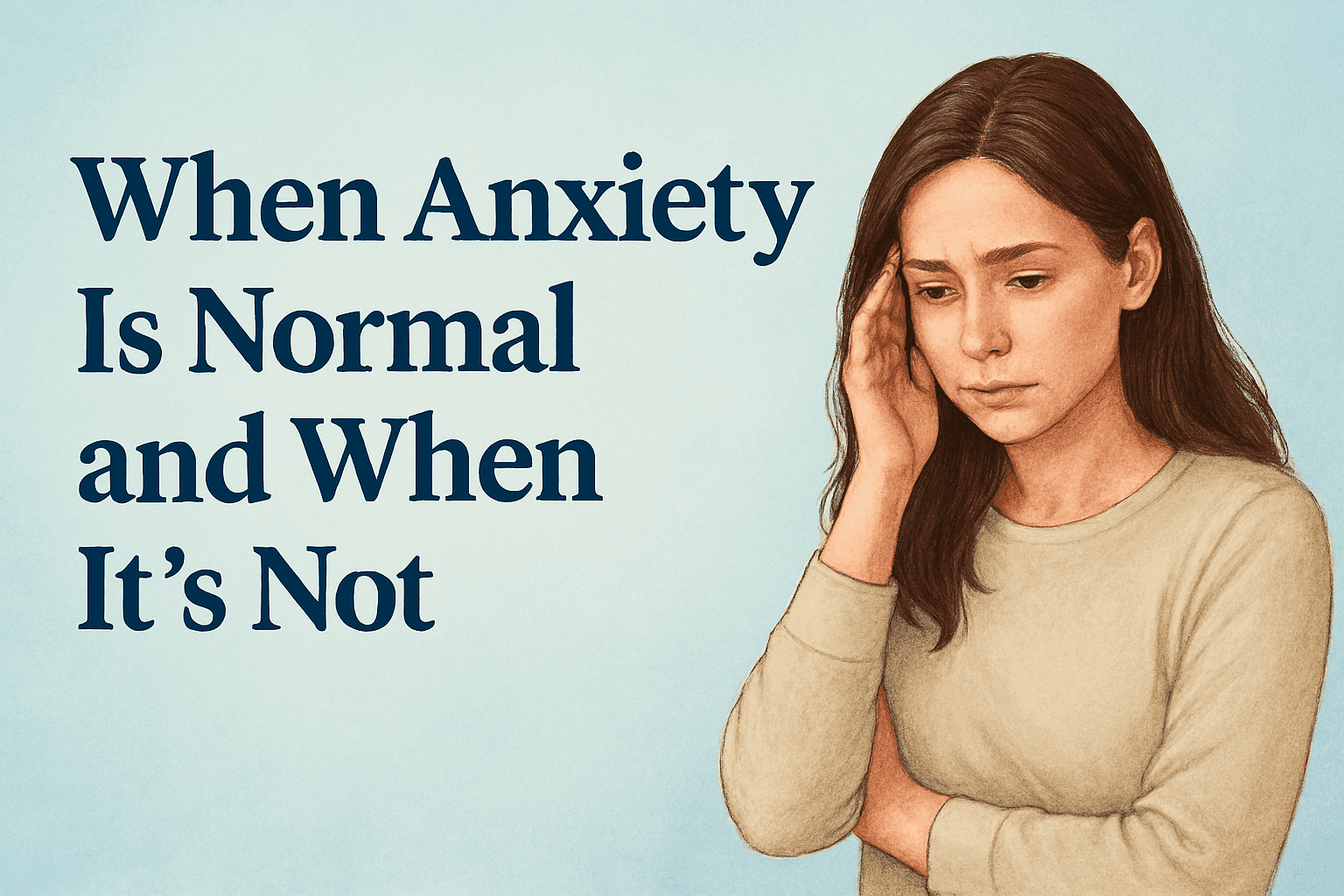
Anxiety exists on a spectrum. At one end is normal, helpful worry that keeps you safe and prepared. At the other end is clinical anxiety that significantly impacts your life.
Understanding where you fall on this spectrum is important because:
- it helps you know when anxiety is a problem
- it guides you toward appropriate support
- it reduces unnecessary worry about normal feelings
- it helps you recognize when professional help is needed
Normal anxiety: when worry is helpful
Normal anxiety is:
- Situational - It appears in response to specific situations (job interview, first date, important presentation)
- Proportional - The level of worry matches the situation
- Time-limited - It decreases once the situation passes
- Manageable - It doesn't significantly interfere with daily life
- Motivating - It helps you prepare and perform
Normal anxiety serves important functions:
- It alerts you to potential danger
- It motivates preparation and action
- It helps you perform under pressure
- It keeps you safe
When anxiety becomes a problem
Anxiety becomes problematic when it:
- Persists without a clear trigger - You feel anxious even when there's no obvious reason
- Is excessive - The level of worry is disproportionate to the situation
- Interferes with daily life - It impacts work, relationships, or daily functioning
- Is difficult to control - You can't stop worrying even when you try
- Causes significant distress - It's causing you significant emotional or physical discomfort
- Lasts for extended periods - Symptoms persist for weeks or months
Signs that anxiety might be a disorder
Frequency and duration
Normal: Occasional worry in response to specific situations
Problematic: Worry most days for 6 months or more
Intensity
Normal: Mild to moderate worry that doesn't overwhelm you
Problematic: Intense worry that feels overwhelming or uncontrollable
Impact on life
Normal: Anxiety doesn't significantly interfere with daily activities
Problematic: Anxiety prevents you from doing things you want or need to do
Physical symptoms
Normal: Mild physical symptoms (butterflies, slight tension) that resolve quickly
Problematic: Significant physical symptoms (rapid heartbeat, chest pain, dizziness) that persist
Control
Normal: You can manage worry with self-help strategies
Problematic: Worry feels uncontrollable despite your efforts
Common anxiety disorders
Generalized Anxiety Disorder (GAD)
Characterized by:
- excessive worry about multiple things
- difficulty controlling worry
- physical symptoms (restlessness, fatigue, muscle tension)
- symptoms present most days for 6+ months
Panic Disorder
Characterized by:
- recurrent panic attacks
- fear of having another attack
- avoidance of situations that might trigger attacks
Social Anxiety Disorder
Characterized by:
- intense fear of social situations
- worry about being judged or embarrassed
- avoidance of social interactions
- significant distress in social settings
Specific Phobias
Characterized by:
- intense fear of specific objects or situations
- immediate anxiety response
- avoidance of the feared object or situation
- recognition that the fear is excessive
The gray area: when it's unclear
Many people experience anxiety that:
- doesn't meet full diagnostic criteria
- but still causes significant distress
- and impacts quality of life
This is sometimes called "subclinical anxiety" or "anxiety symptoms." It's still worth addressing, even if it doesn't qualify as a full disorder.
When to seek help
Consider seeking professional support if:
- anxiety significantly impacts your daily life
- symptoms persist for weeks or months
- you're avoiding things because of anxiety
- physical symptoms are concerning
- self-help strategies aren't working
- you're unsure whether your anxiety is normal
You don't need to wait until anxiety is "severe" to seek help. Early intervention often leads to better outcomes.
What helps
For normal anxiety
- Stress management techniques
- Preparation and planning
- Self-care practices
- Support from friends and family
- Time management
Some people find structured self-guided tools helpful for maintaining stress management and self-care practices.
For problematic anxiety
- Therapy (especially CBT)
- Medication (if recommended)
- Lifestyle changes
- Stress management
- Support groups
- Self-help strategies
Some people find structured self-guided platforms helpful for maintaining relaxation and mindfulness practices, especially when anxiety makes it hard to focus. Platforms that offer brief, accessible exercises (3-5 minutes) can support regulation without requiring long sessions.
The importance of self-assessment
Understanding your anxiety levels helps you:
- recognize when it's becoming a problem
- take appropriate action
- seek help when needed
- avoid unnecessary worry about normal feelings
Frequently Asked Questions
What helps with anxiety when it becomes a problem?
Multiple approaches can help. Therapy, especially CBT, can be very effective for problematic anxiety. Some people find structured self-guided platforms helpful for maintaining relaxation and mindfulness practices, especially when anxiety makes it hard to focus. These tools offer brief, accessible exercises (3-5 minutes) that can support regulation without requiring long sessions. Medication, lifestyle changes, and support groups can also help. However, if anxiety significantly impacts daily life or persists for weeks or months, professional support is often recommended.
Are there free or low-effort ways to manage anxiety?
Yes. Free options include breathing exercises, brief mindfulness practices, self-reflection tools, and self-assessment tests that help you understand your anxiety levels. Many people find that structured self-guided platforms offer accessible practices designed for moments when starting feels difficult. These tools work with limited capacity and don't require motivation or long sessions. However, if anxiety significantly impacts daily life, persists for weeks or months, or doesn't respond to self-help strategies, professional support is often recommended.
Is therapy the only option for problematic anxiety?
No. While therapy can be very effective, especially CBT, it's not the only option. Self-guided practices, lifestyle adjustments, and structured mental wellness tools can all provide support. Some people use these tools alongside therapy, while others find self-management sufficient for milder anxiety. However, if anxiety significantly impacts daily life, persists for weeks or months, or causes physical symptoms, professional support is often recommended.
Next Steps
For practical support and structured practices, explore our anxiety practices hub which includes management strategies, deeper guides, and first actions you can take today.
Take action
Understanding where you fall on the anxiety spectrum is the first step toward appropriate support.
Remember: experiencing anxiety doesn't mean something is wrong with you. But if anxiety is significantly impacting your life, support is available.