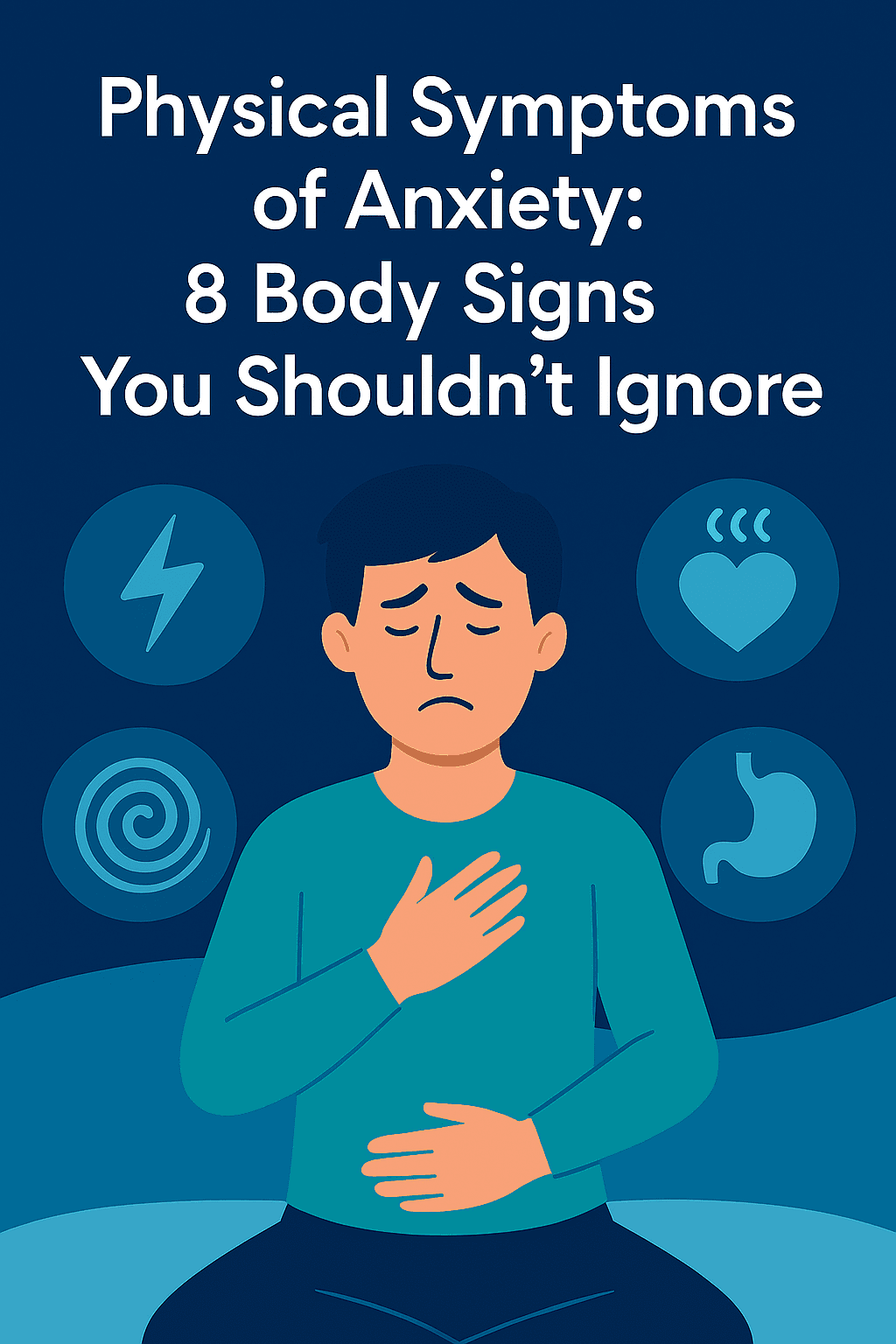
Anxiety isn't just in your head - it shows up in your body, too
Many people think anxiety is purely mental: racing thoughts, worry, fear. But anxiety has a powerful physical component that often goes unrecognized.
When your body's stress response activates, it triggers real physical changes. These symptoms can be confusing because they don't always feel connected to worry or fear.
Understanding the physical signs of anxiety helps you:
- recognize what's happening in your body
- distinguish anxiety from other health concerns
- take appropriate steps to manage symptoms
Why anxiety creates physical symptoms
Anxiety activates your body's fight-or-flight response. This is an ancient survival mechanism designed to help you respond to danger.
When anxiety triggers this system:
- your nervous system releases stress hormones (cortisol, adrenaline)
- your heart rate increases
- your muscles tense
- your breathing becomes shallow
- your digestive system slows or speeds up
These changes are meant to be temporary - your body should return to normal once the threat passes. But with chronic anxiety, your body can get stuck in this activated state.
Physical symptoms you might be ignoring
1. Muscle tension and pain
Chronic muscle tension is one of the most common physical symptoms of anxiety.
You might notice:
- tightness in your shoulders, neck, or jaw
- headaches or migraines
- back pain
- general body aches
This happens because anxiety keeps your muscles in a state of readiness. Over time, this constant tension leads to pain and discomfort.
2. Digestive issues
Your gut and brain are closely connected through the gut-brain axis. Anxiety can disrupt normal digestive function.
Common digestive symptoms include:
- stomach pain or cramping
- nausea
- diarrhea or constipation
- bloating
- loss of appetite or overeating
Many people don't connect these symptoms to anxiety, especially if they don't feel "anxious" in the traditional sense.
3. Chest pain and heart palpitations
Anxiety can cause sensations that feel like heart problems:
- chest tightness or pain
- rapid heartbeat
- heart palpitations (feeling like your heart is skipping beats)
- shortness of breath
These symptoms can be frightening, especially if you mistake them for a heart attack. While anxiety-related chest pain is usually harmless, it's always worth checking with a healthcare provider to rule out other causes.
4. Fatigue and exhaustion
Anxiety is exhausting. Your body is constantly in a state of high alert, which drains energy.
You might experience:
- feeling tired even after sleeping
- difficulty getting out of bed
- low energy throughout the day
- feeling physically drained
This fatigue isn't laziness - it's your body's response to chronic stress activation.
5. Sleep problems
Anxiety and sleep have a bidirectional relationship: anxiety disrupts sleep, and poor sleep worsens anxiety.
Common sleep-related symptoms:
- difficulty falling asleep
- waking up frequently
- racing thoughts at night
- feeling unrested in the morning
- nightmares or disturbing dreams
6. Dizziness and lightheadedness
Anxiety can affect your balance and cause feelings of dizziness.
This might show up as:
- feeling lightheaded
- vertigo (sensation of spinning)
- feeling unsteady on your feet
- feeling like you might faint
These symptoms often occur during panic attacks or high-anxiety moments.
7. Skin issues
Anxiety can manifest on your skin in various ways:
- excessive sweating
- rashes or hives
- dry skin
- picking at skin (dermatillomania)
- hair loss (in severe, chronic cases)
8. Frequent urination
Anxiety can increase the need to urinate, even when your bladder isn't full. This is related to the activation of your nervous system.
When physical symptoms mask anxiety
Sometimes, people experience physical symptoms without recognizing the underlying anxiety.
This can happen because:
- the physical symptoms are more noticeable than the mental ones
- you've learned to ignore or suppress anxious thoughts
- the connection between body and mind isn't obvious
If you're experiencing unexplained physical symptoms, especially multiple symptoms together, anxiety might be the underlying cause.
How to recognize anxiety-related physical symptoms
Physical symptoms are more likely related to anxiety if they:
- appear or worsen during stressful periods
- don't have a clear medical explanation
- come and go with your stress levels
- improve with relaxation or anxiety management techniques
- are accompanied by worry, fear, or racing thoughts
Is this anxiety or a medical problem?
Physical anxiety symptoms often feel serious, which is why it’s important to know when to seek medical advice.
- See a healthcare provider if symptoms:
- are sudden and severe
- worsen rapidly
- include fainting, severe chest pain, or neurological changes
If tests come back normal and symptoms persist during stress, anxiety is a common underlying cause.
What to do about physical anxiety symptoms
1. Rule out other causes
First, see a healthcare provider to rule out medical conditions. Many physical symptoms can have multiple causes, and it's important to get proper medical evaluation.
2. Practice body awareness
Learn to notice when your body is holding tension. Regular body scans can help you identify:
- where you're holding tension
- when symptoms appear
- what triggers them
3. Use relaxation techniques
Physical symptoms respond well to relaxation practices:
- deep breathing exercises
- progressive muscle relaxation
- gentle stretching or yoga
- meditation or mindfulness
Some people find structured self-guided platforms helpful for maintaining these practices, especially when physical symptoms make it hard to focus. Platforms that offer brief, accessible exercises (3-5 minutes) can support regulation without requiring significant time or motivation.
4. Address the underlying anxiety
Managing the anxiety itself will reduce physical symptoms. Consider:
- therapy (especially CBT)
- stress management techniques
- lifestyle changes
- medication (if recommended by a healthcare provider)
5. Take care of your body
Support your body's recovery:
- prioritize sleep
- eat regular, balanced meals
- stay hydrated
- move your body regularly
- avoid excessive caffeine or alcohol
The mind-body connection
Your mental and physical health are deeply connected. Physical symptoms of anxiety are real, valid, and treatable.
Ignoring physical symptoms won't make them go away - but understanding them and addressing the underlying anxiety can bring relief.
Frequently Asked Questions
What helps with physical symptoms of anxiety?
Multiple approaches can help. Relaxation techniques like deep breathing, progressive muscle relaxation, and brief mindfulness practices can reduce physical tension and calm the nervous system. Some people find structured self-guided platforms helpful because they offer short practices (3-5 minutes) that can be done when physical symptoms appear. Therapy, especially CBT, can help address underlying anxiety. Lifestyle changes like regular sleep, exercise, and stress management also play important roles. However, always rule out medical causes first if symptoms are new or severe.
Are there free or low-effort ways to manage physical anxiety symptoms?
Yes. Free options include breathing exercises, brief body scans, progressive muscle relaxation, and self-reflection tools. Many people find that structured self-guided platforms offer accessible practices designed for moments when physical symptoms make it hard to focus. These tools can support regulation without requiring significant time or motivation. However, if physical symptoms persist, worsen, or significantly affect daily life, professional support is often recommended.
Is therapy the only option for physical anxiety symptoms?
No. While therapy can be very effective, especially CBT, it's not the only option. Self-guided relaxation practices, lifestyle adjustments, and structured mental wellness tools can all help manage physical symptoms. Some people use these tools alongside therapy, while others find self-management sufficient for milder symptoms. However, if physical symptoms are severe, persistent, or significantly affect daily functioning, professional support is often recommended to rule out medical causes and address underlying anxiety.
Take the next step
If you're experiencing physical symptoms that might be related to anxiety, understanding your anxiety levels can help you take appropriate action.
This quick assessment can help you understand whether anxiety might be contributing to your physical symptoms.